
01Service
Battery Replacement
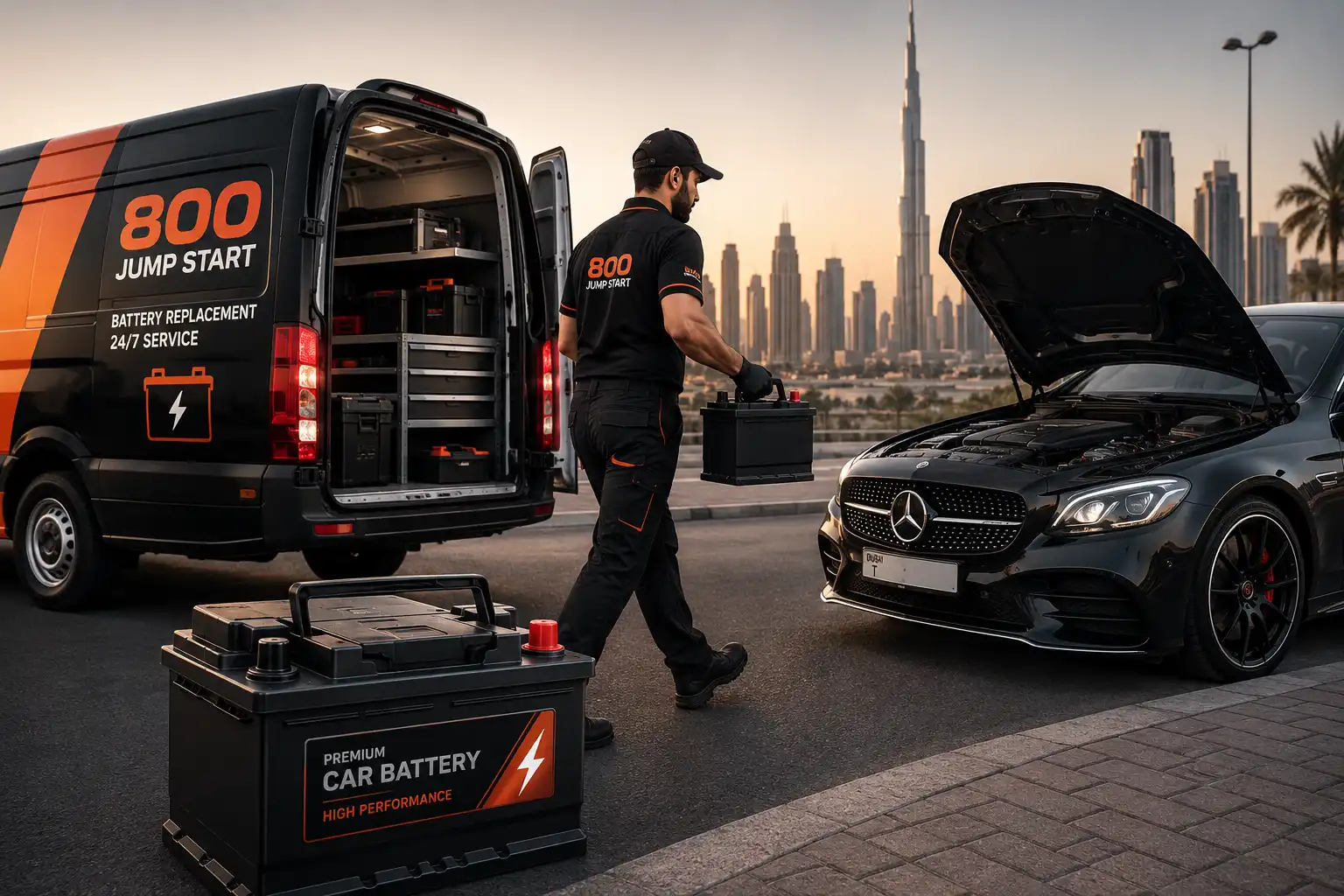
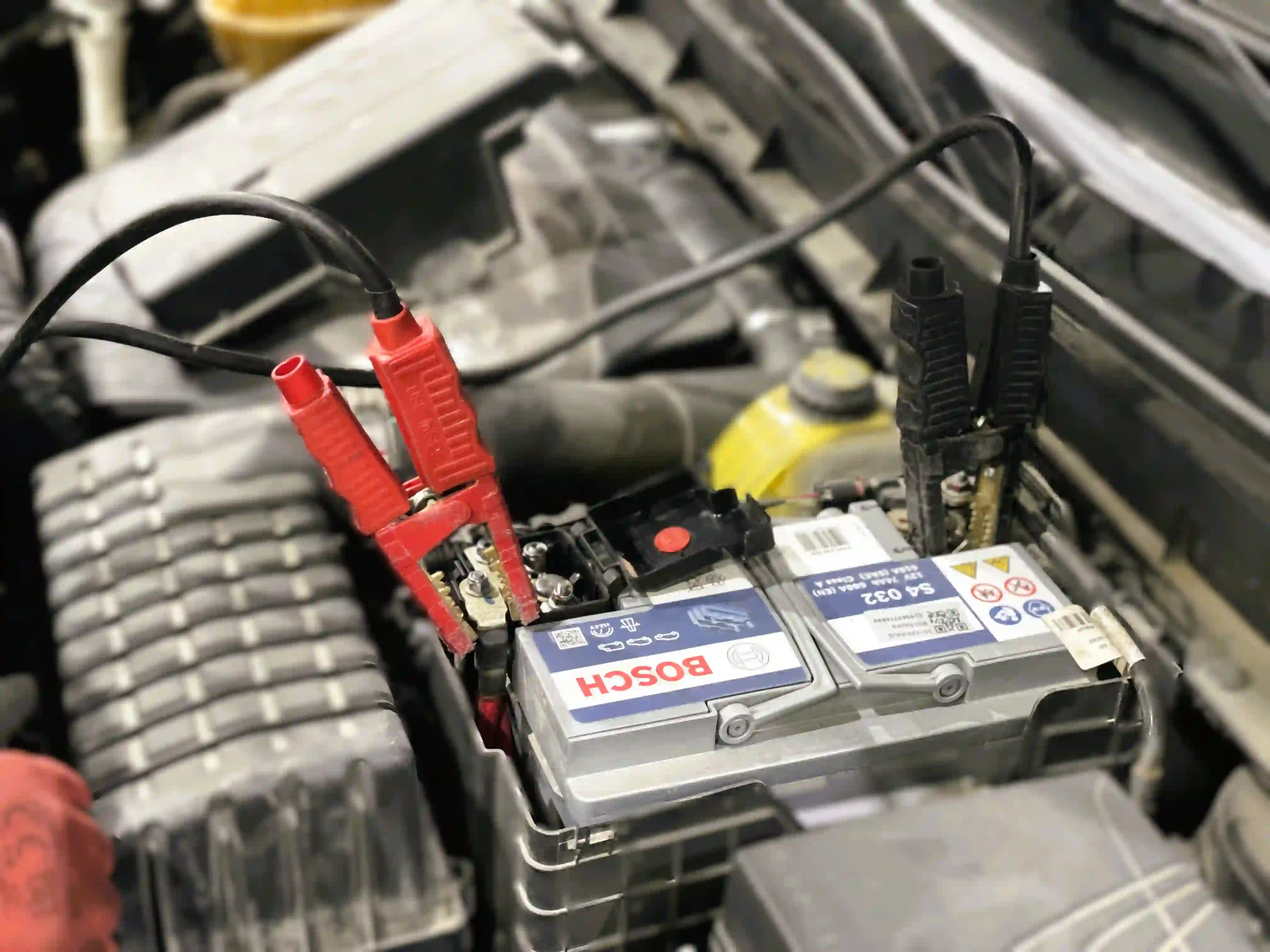
We bring the right battery to your car, fit it on the spot and register it to the vehicle's charging system.
View serviceA dead battery doesn't stop your day — we do.
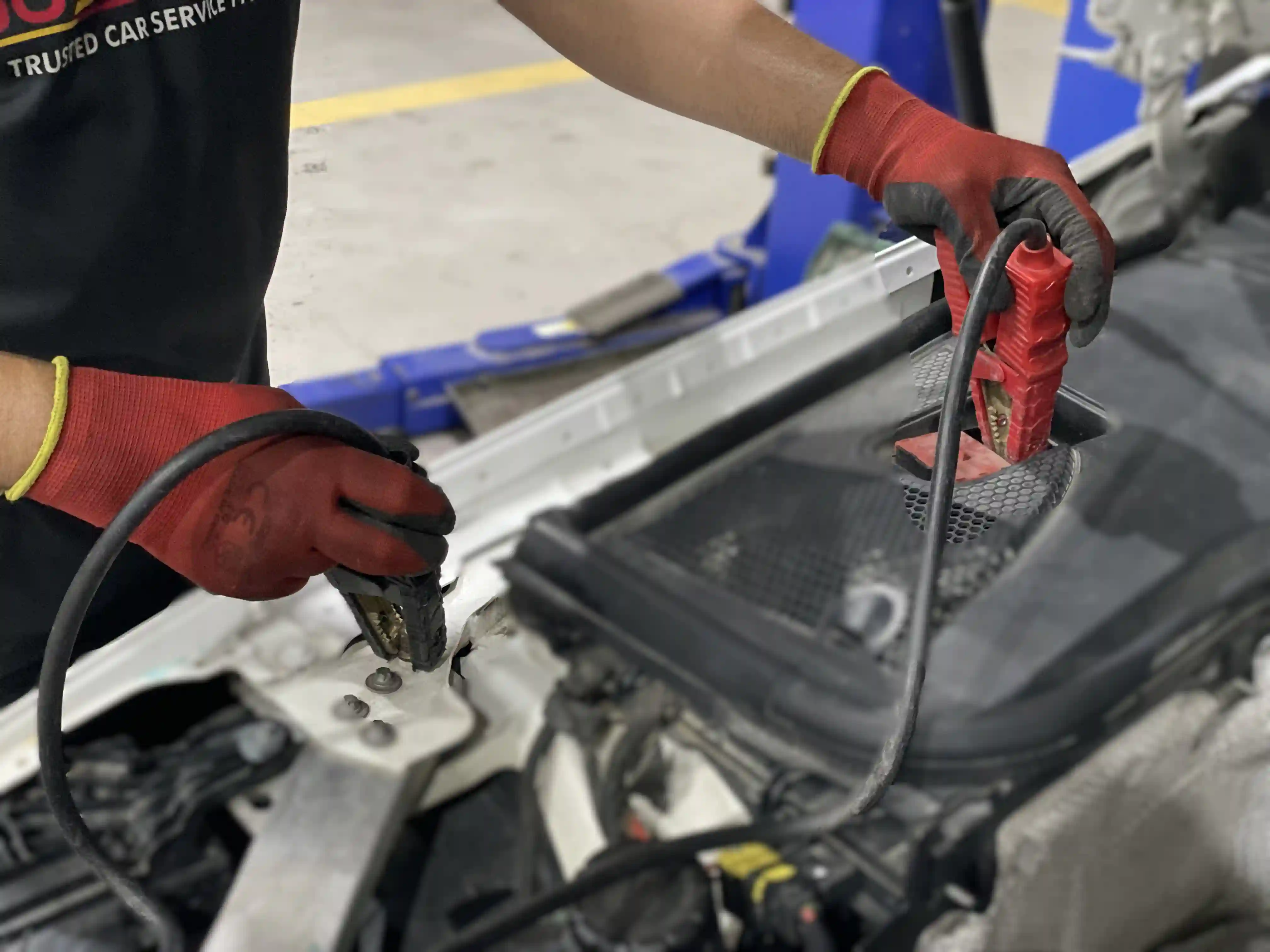
We come to your location, test the battery, start your car, and only replace it if genuinely needed. Fast, reliable and available 24/7 across Dubai.
Most cars that will not start in Dubai have not failed mechanically — they have simply run out of battery. Sustained heat above 45°C boils electrolyte out of the cells and corrodes the plates, which is why a battery that cranked perfectly in March can be finished by July. Two to three years is a realistic life here, not the four or five the manufacturer quotes.
That matters for what happens when we arrive. A jump start gets you moving in minutes, but it does not tell you whether the battery is finished, whether the alternator has stopped charging, or whether something is draining the car overnight. We test all three before recommending anything, because roughly one call in ten turns out not to need a battery at all.
If the fault turns out to be something else, we also handle expert mobile battery replacement Dubai on the same visit.
Battery health, tested on site
We load-test the battery, measure charging voltage under load and check for a parasitic drain before recommending anything.
08Services
One number covers all of it. We come to the car, work out what actually failed, and finish the job where the vehicle is standing.
30–45 minutes is the typical arrival window, 24/7.
01Service
We bring the right battery to your car, fit it on the spot and register it to the vehicle's charging system.
View service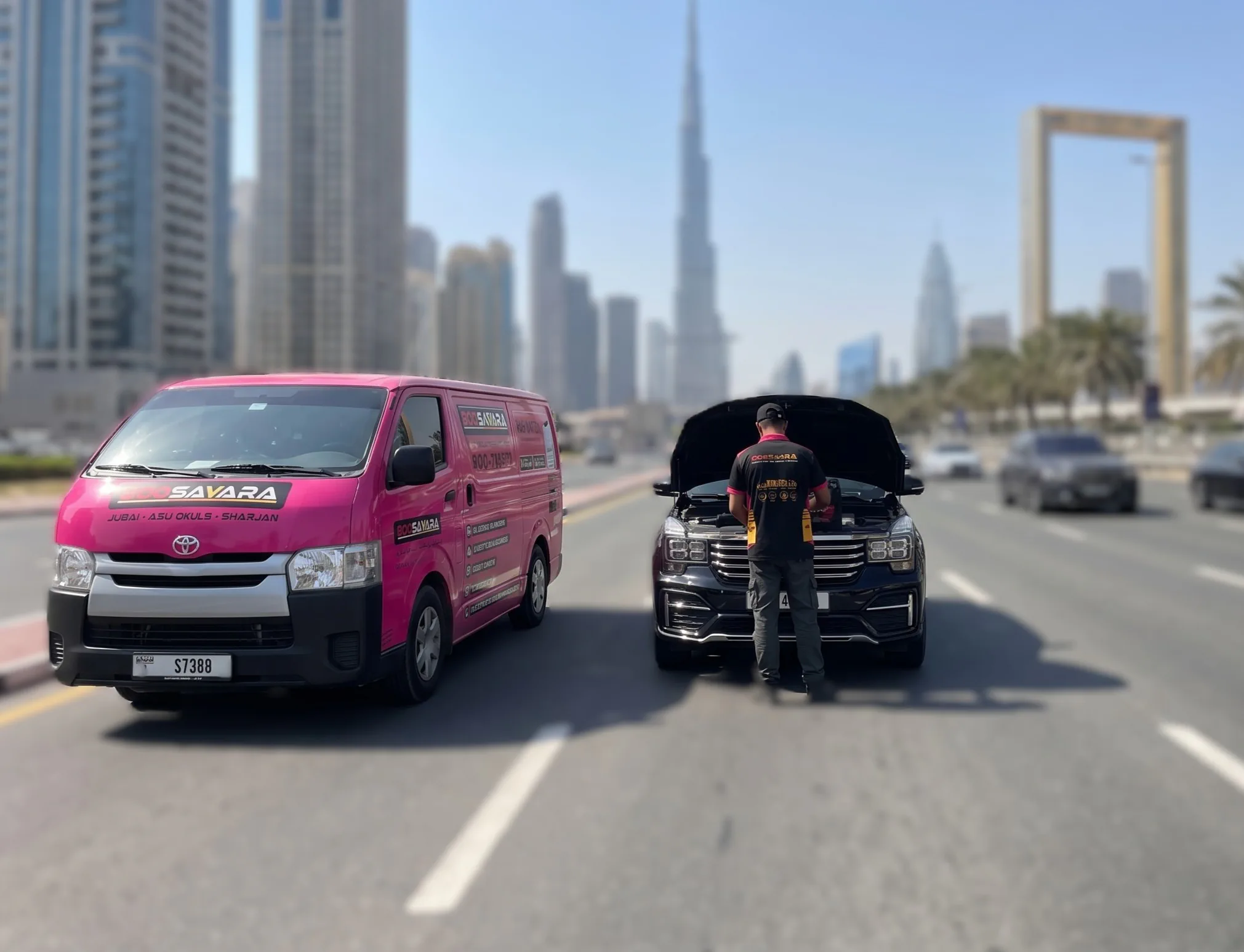
02Service
One number for breakdowns: dead batteries, flat tyres, empty tanks, lockouts and recovery.
View serviceFlatbed recovery for non-runners, accident damage and low-clearance cars, taken where you want them.
Towing and vehicle transfer across Dubai, matched to your drivetrain so nothing gets damaged.
We fit your spare or bring a replacement tyre to you, torqued and pressure-set correctly.
A proper plug-and-patch repair where the puncture allows it, so you keep your original tyre.
Petrol or diesel delivered to your car in sealed containers, enough to reach a station safely.
Proper charging system testing, so you replace the part that actually failed.
—Process
One call, four steps — and nothing is replaced before the car has been tested.
On the call
Clicking, slow cranking, a dashboard that stays dead, a warning light that will not clear. What the car is actually doing decides which technician and which equipment we send.
On the call
A dropped pin beats an address every time. Inside a tower or a mall, the parking level and the nearest pillar matter far more to the driver finding you than the name of the building.
At your car
The car runs first. Then we load-test the battery, check what the alternator is putting out, and look for a parasitic drain — the fault that quietly flattens a brand new battery too.
At your car
If the battery is genuinely finished, the correct one is fitted on the spot, registered to the car where the marque requires it, and the old one leaves with us for recycling.
—Battery life in Dubai
A battery sold as a five-year part rarely sees three here. Three ordinary things are doing the damage, and none of them is a fault.
Heat, short journeys and long stands are simply the shape of driving in this city, and each one takes capacity out of a lead-acid battery that never comes back. Working out which of the three is at work on your car is most of the diagnosis — and it is also why a battery that tested perfectly well in February can leave you stranded in July.
01Heat
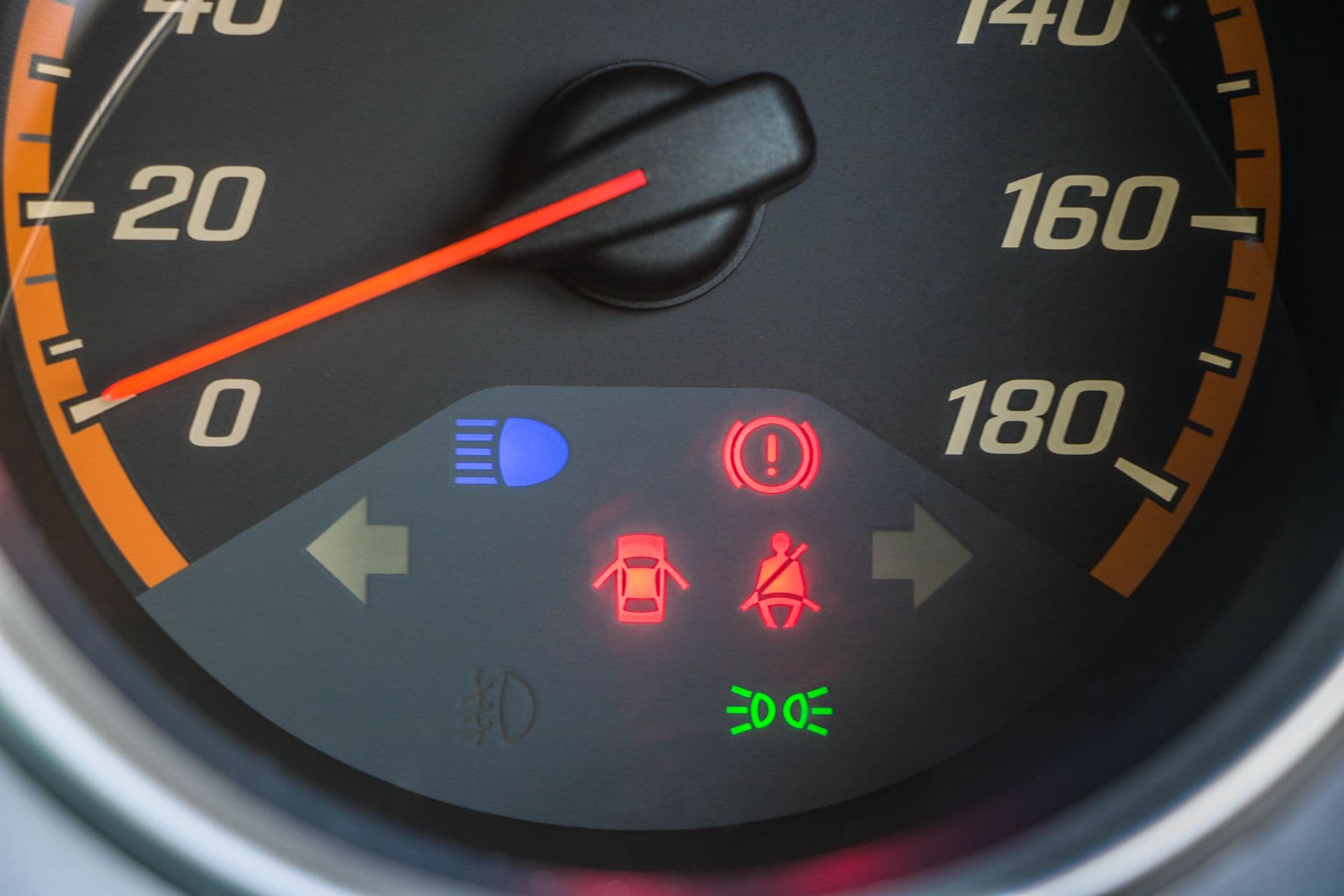
A lead-acid battery is a chemical reaction held inside a plastic case, and chemistry accelerates with temperature. Under a bonnet in a Dubai summer the cells sit far above the temperature they were engineered around, for months at a time, whether the car is moving or parked at the kerb.
Two things follow. Water evaporates out of the electrolyte and leaves the plates less well covered than they should be. The positive plates corrode, shedding active material to the bottom of the case where it can never take part in the reaction again. Both are permanent, and neither shows on the dashboard — capacity leaves quietly, and the battery keeps starting the car right up until the morning it does not.
What you notice
Nothing at all — until the first slow, laboured crank.
02Short journeys
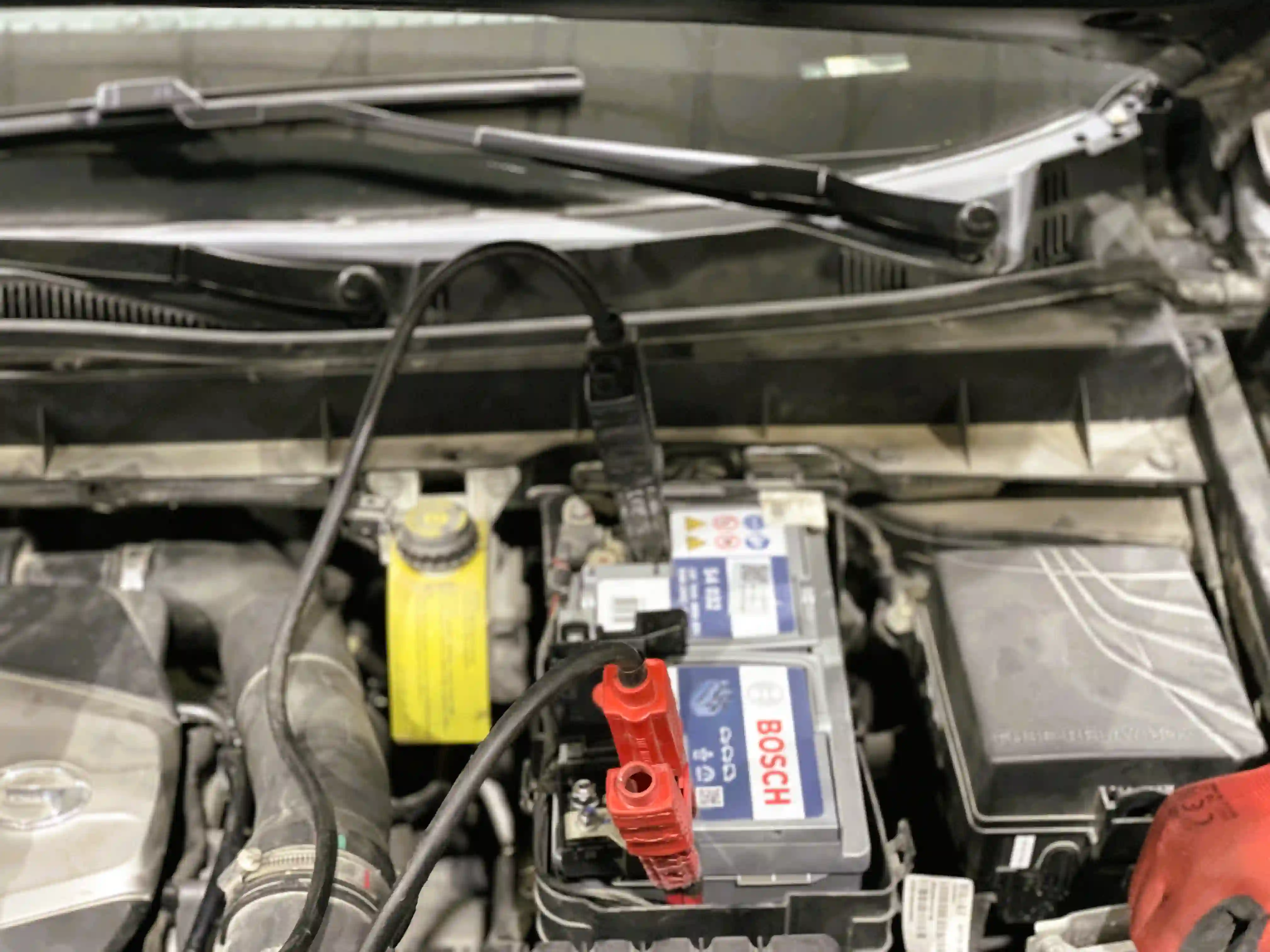
Turning the engine over is the single largest current a battery will ever deliver. Putting that charge back is the alternator's job, and the alternator needs running time to do it — considerably more running time than most journeys across Dubai actually last.
Now add the air conditioning at full load from the moment you set off, plus the lights, the screen and everything else on the loom. The alternator spends the drive supplying the car rather than refilling the battery, so the battery lives permanently part-charged. Part-charged plates sulphate: hard crystals form on the plate surface and progressively stop accepting charge at all. A charging system that is already weak turns a slow decline into a breakdown, which is why a battery that keeps going flat is worth testing at the alternator as well as at the posts.
What you notice
The car starts cleanly after a long drive, and struggles after a week of short ones.
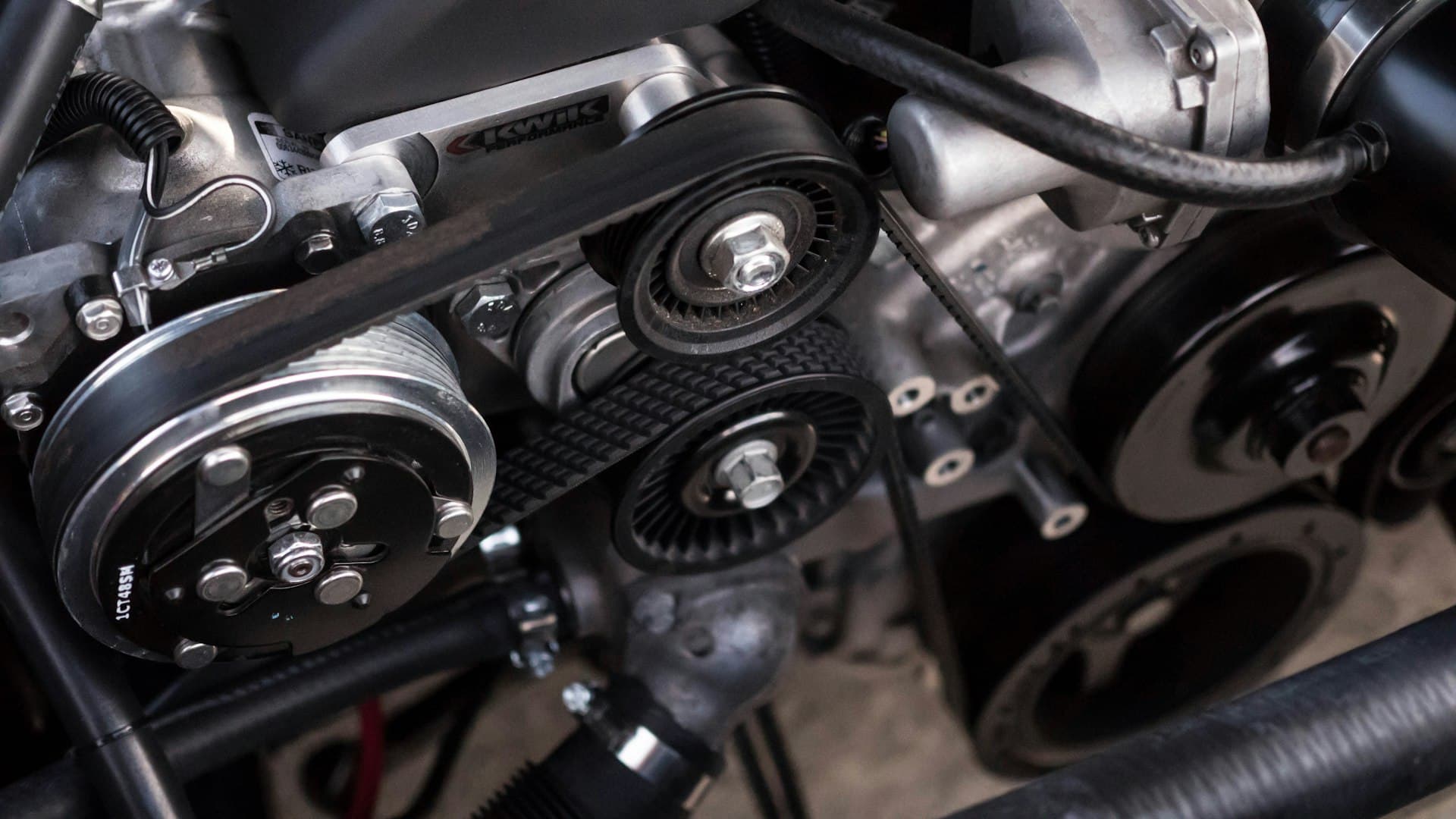
03Standing
The alarm is awake. So is the immobiliser, the tracker, the keyless-entry aerial listening for your fob, and dozens of control modules that never fully sleep. Together they pull a small, continuous current every hour of every day the car sits still.
Leave a car at the airport for two weeks and that quiet draw is enough on its own to bring it back flat. The flat battery is not really the damage, though — the damage is that every deep discharge takes a permanent slice out of what the battery can hold afterwards. A car that is driven rarely can wear out a battery faster than one driven every day.
What you notice
The car that only comes out at weekends is the one that needs a jump start.
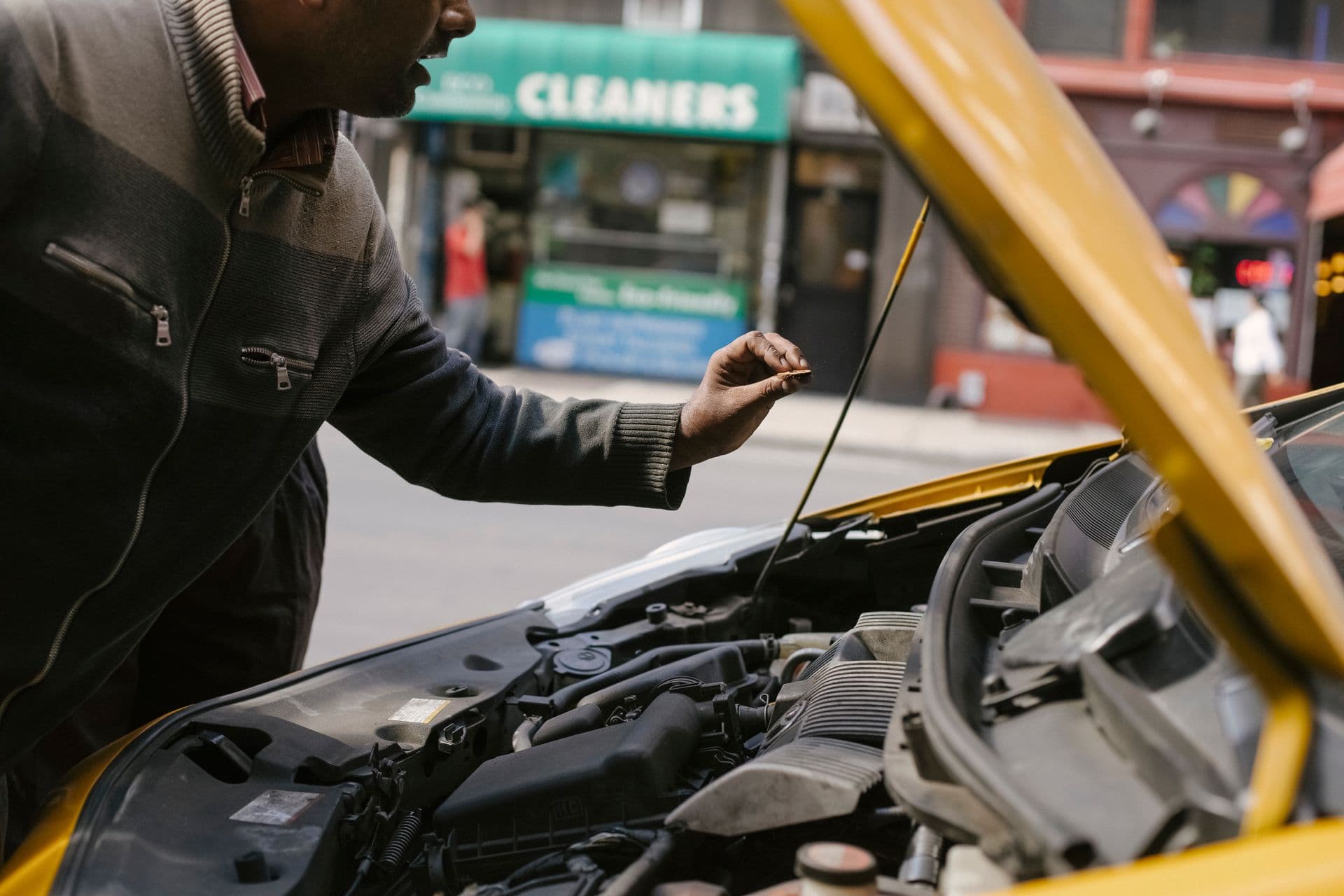
The useful part
A battery dying of heat, a battery dying of short journeys and a battery dragged flat by standing all behave differently under a load test, and that test takes a couple of minutes at the kerb. We come to the car, test what is actually there and start it. If there is life left in the battery we will tell you so; if it has genuinely gone, we fit a replacement on the spot and you drive away.
Open 24 hours, 7 days a week30–45 minutes typical arrival
03Diagnosis
All three end the same way — a car that will not start. They do not begin the same way, and that is what tells them apart.
01Cause
Fails after standing still. Fine once it is running.
What you notice
How we check it
Resting voltage at the terminals, then a load test that puts the battery under real cranking current rather than reading it at rest.
02Cause
Fails while driving. Nothing is refilling the battery.
What you notice
13.8–14.7 VHealthy charging, engine running
How we check it
Charging output measured at the terminals with the engine running, at idle and under load.
03Cause
The battery is healthy. Something keeps taking from it.
What you notice
How we check it
Standing current measured with the ignition off and the car settled, then fuses pulled one at a time until the reading drops.
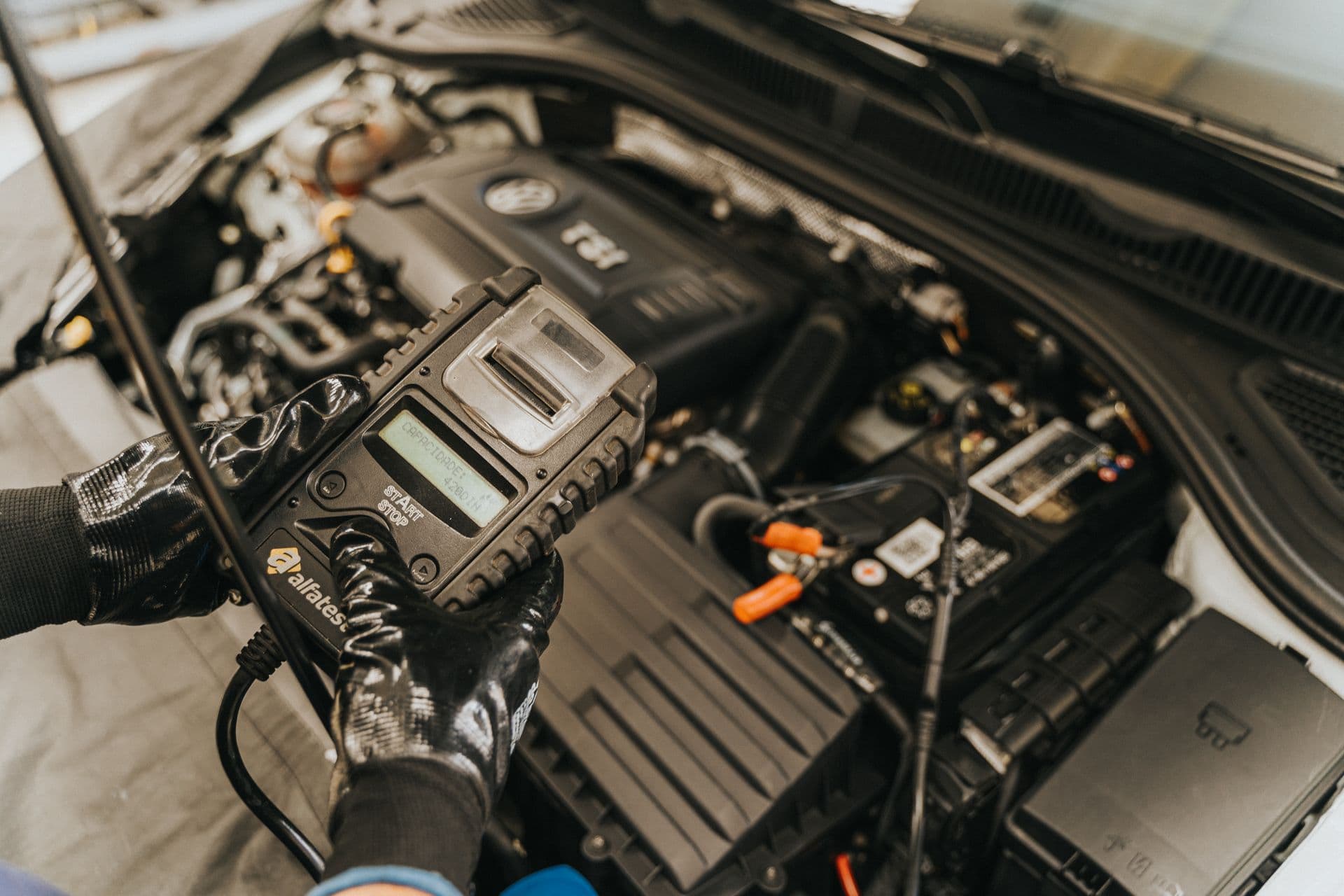
Guessing is expensive in both directions. Fit a battery to a car with a failed charging system and it will be flat again within days. Replace an alternator on a car that only ever needed a battery and you have paid for the wrong part twice over.
So we test all three at your car, in that order, before we recommend a thing. If the charging system is at fault, what you need is car alternator repair, not a new battery. If the battery has genuinely reached the end of its life, we carry stock and can handle the car battery replacement on the spot. And often enough the answer is neither — the terminals were loose, or the drain was a boot light — in which case you keep the battery you already own.
Testing on site, 24/7. Typically with you in 30–45 minutes.
Where a battery is not the underlying problem, the next thing to check is expert mobile breakdown service Dubai.
Many callers book flatbed car recovery Dubai at the same time.
Browse everything we cover under professional car battery service areas Dubai.
The full list is under 24/7 car marque battery service Dubai.
—Marque coverage
Where the battery sits, which technology it has to be, and whether the car needs telling all change by marque.
Most modern cars monitor the battery rather than simply drawing from it. A sensor on the negative terminal reports charge state, temperature and age to an energy management module, and the charging strategy is calculated from that history — not from whatever is physically connected.
Fit a new battery without registering it and the car carries on charging to a profile built for a worn-out one. The battery is mischarged from the first drive, and that is the most common reason a battery replaced elsewhere fails inside a year. On the 29 marques marked below, coding is part of the job rather than an extra.
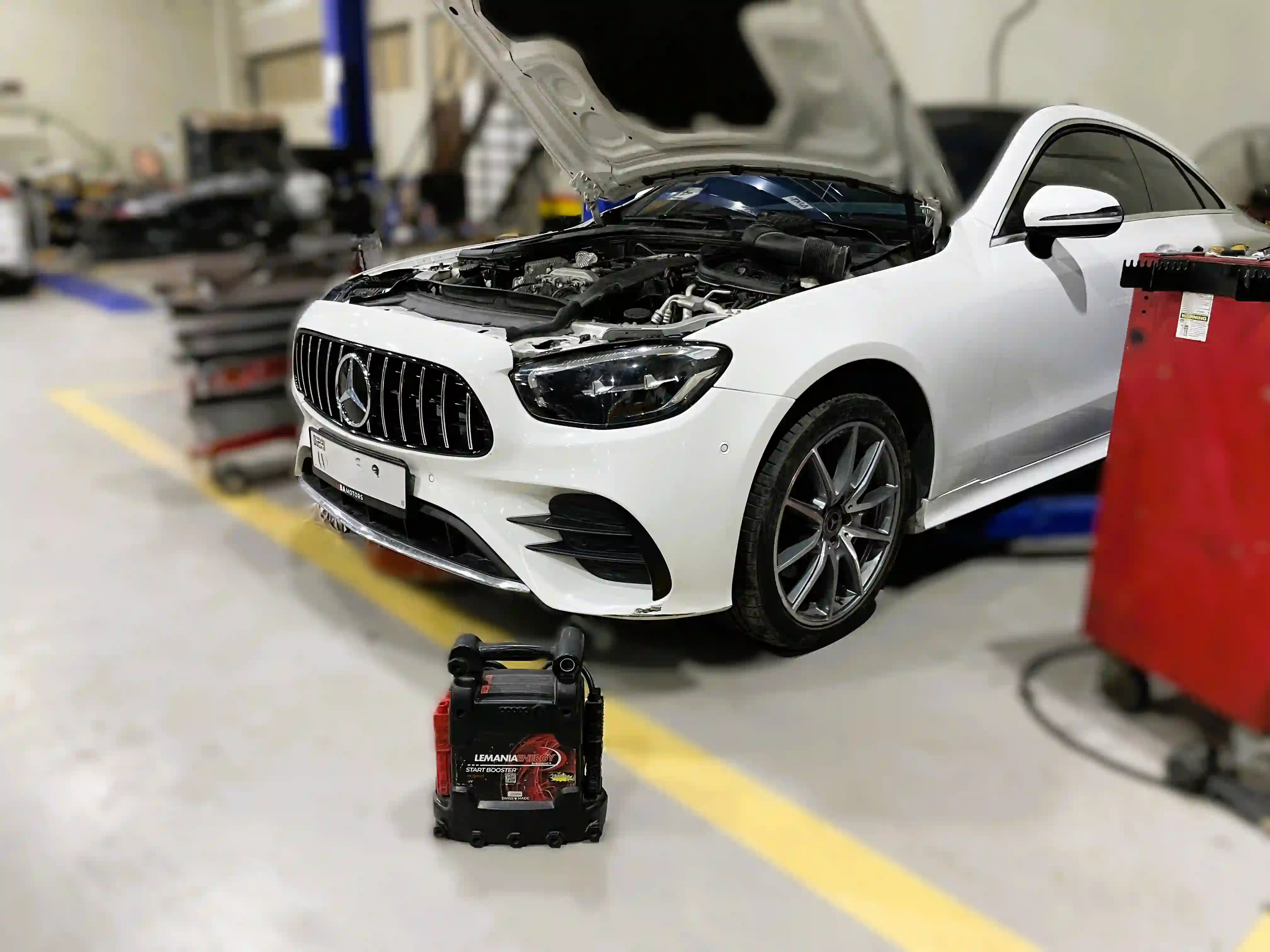
Reading this index
Codedmeans the new battery must be registered to the car's energy management system before it will charge correctly.
13 marques · 3 coded
8 marques · 1 coded
8 marques · 7 coded
6 marques · 5 coded
Not sure which of these your car needs? Tell us the make, model and year on the phone and we will confirm the correct battery, and whether it has to be coded, before we set off.
04Coverage
From tower basements in Dubai Marina to villa driveways in Al Khawaneej and the industrial yards of Jebel Ali.

Every area has its own page, written for the reality of reaching a car there: whether the parking is a basement or a surface bay, how access is controlled, which roads we come in on, and the failure patterns we genuinely see in that community. A Marina tower basement and a villa driveway in Al Khawaneej are different jobs before anyone opens the bonnet.
Arrival time is the part most sites quietly get wrong. Ours differs by area, and it depends on the hour — Sheikh Zayed Road at six in the evening, a barrier at a gated community, six levels of basement to descend. So we quote a realistic window for your exact location on the call, instead of one citywide number we could not keep everywhere.
Six zones, 68 communities
25areas
Al Barsha, Al Barsha Heights, Al Barsha South and 22 more
17areas
Al Barari, Al Jaddaf, Al Jafiliya and 14 more
6areas
Abu Hail, Al Karama, Al Raffa and 3 more
12areas
Al Khawaneej, Al Nahda, Al Qusais and 9 more
4areas
Dubai Silicon Oasis, Dubailand, Global Village and 1 more
4areas
Dubai Investments Park, Dubai South, Jebel Ali Industrial Area and 1 more
A sample of the areas we cover
One page per community — no duplicate pages for the same place
Open 24 hours, 7 days a week, across every area listed above.
—Battery technology
Most battery advice in Dubai is a list of brand names. What actually decides how long a battery lasts is the construction inside the case, and whether it matches what your car was built to charge.
The short version
Absorbent glass mat
The electrolyte is held in a glass fibre mat pressed between the plates instead of sitting as free liquid. That construction tolerates deep cycling, takes charge back quickly, and copes with the standing load of a car full of electronics that never fully go to sleep. It is sealed, so vibration and orientation matter far less.
Typically fitted to
Standard on most recent BMW, Mercedes-Benz, Audi, Porsche and Land Rover — and on any car whose original battery was AGM.
Enhanced flooded battery
Still a flooded design with free electrolyte, but reinforced: a heavier plate structure and additives built for the repeated restarts start-stop imposes. It is the minimum specification for a start-stop car, and a real engineering step up from conventional flooded rather than a marketing tier.
Typically fitted to
Cars that left the factory on EFB. An EFB car can be moved up to AGM; an AGM car should never be moved down.
Calcium flooded
Free liquid electrolyte and calcium alloy grids, sealed and maintenance-free. For a car with no start-stop system and no heavy aftermarket electrical load this is the correct battery, and specifying AGM instead buys capability the vehicle has no way to use.
Typically fitted to
Conventional vehicles without start-stop and without unusual electrical demands.
Fitting a conventional flooded battery to a car with automatic start-stop is the most expensive cheap decision in the trade. The battery was never built for the charge and discharge cycling that shutting the engine down at every junction imposes, so it degrades quickly — failure within about a year is typical, instead of the service life the car should have had.
The second half of the problem is quieter. Many cars detect that the fitted battery cannot support start-stop and simply switch the system off. No warning light, no message. The engine stops shutting down at traffic lights, fuel consumption creeps up, and nothing on the dashboard connects any of it to a battery someone fitted months earlier.
So the question we answer before anything is quoted is what the car was built around: start-stop or not, AGM or EFB as the original fitment, and whether the replacement has to be registered to the car's energy management before it will be charged correctly. That check is part of every battery replacement we carry out.
24 battery brands, grouped by what their ranges can genuinely cover rather than by where they sit on a price list. Every one of them is a reasonable purchase in the right car.
These cover the full spread — AGM for start-stop and European original fitments, through EFB, down to conventional calcium.
No AGM line, but capable of the lighter start-stop duty and well suited to conventional cars.
For cars without start-stop, where a correctly sized flooded battery is all the vehicle can actually use.
—Reputation
That score is Google's, not ours, and it is the only rating on this page. What follows is the part we actually control: how a callout runs, start to finish.
Google reviews
4.5
Out of 5 — from 2,477 Google reviews
46 28B Street, Al Quoz Industrial Third, Al Quoz, Dubai, UAE
Shown exactly as Google reports it. We publish no testimonials, no invented totals and no customer names — if we cannot stand behind a number, it is not on this site.
What that rating is built on
Every callout starts with a test — the battery under load, the starter draw, the alternator's charging output. Roughly one call in ten turns out not to need a battery at all, and that is exactly what we tell you. The test decides, not the sale.
The figure is agreed on the phone, before anyone sets off. Nothing is priced at your window once you are already standing beside a car that will not start.
There is nothing to join, no annual fee and no plan that has to be active before we will come out. You call once, for one job, and that is the whole of it.
The line is answered at three in the morning, on a Friday, and on a public holiday, exactly as it is at three in the afternoon on a Tuesday. Typical arrival is 30–45 minutes, and you are told the realistic time on the call rather than after it.
We work out of Al Quoz Industrial Third — the address is on the contact page, not hidden — and we cover every one of the 68 areas of the city — from Deira to Dubai South. See the full coverage list.
Fitting is only half the job. Where the marque requires the new battery to be registered to the car's charging system, we do that before we leave — otherwise the car keeps charging to the old battery's profile and the new one ages early. The requirement is set out marque by marque across all 55 we cover, so you can check yours before you call.
Rather check for yourself
?Questions
Typically 30–45 minutes, though it genuinely depends where you are. Business Bay is not the same as Dubai South or Damac Hills 2, and we will give you an honest estimate on the phone rather than a citywide figure we cannot meet.
No. We work call-out by call-out with no membership, no annual fee and no contract. You pay for the job you actually needed.
We load-test the battery, check charging voltage and measure standing current before recommending anything. About one call in ten turns out to be an alternator, a parasitic drain or corroded terminals rather than a battery, and we would rather tell you that than sell you a battery that will not fix the problem.
Yes, and it is a large share of what we do. Mobile fitting needs no lift, no ramp and no mains power, so a marked bay on P3 is a perfectly good working environment. Give us the level and the nearest pillar number.
Almost certainly yes. Most modern European cars track battery age and state of health, and fitting a battery without registering it means the car keeps charging to the old battery's profile — the most common reason a new battery fails inside a year. We carry the equipment to do it properly.
Yes. Cover runs open 24 hours, 7 days a week, because batteries fail at 3am and during Eid as readily as at any other time.
Open now · 24/7 · Dubai
Tell us where you are and we’ll give you an arrival time on the call — typically 30–45 minutes. We test the battery at the kerbside, start your car, and only replace the battery if it genuinely needs replacing.
We come to you across the city — all 68 areas we cover and 8 roadside services. Based at 46 28B Street, Al Quoz Industrial Third, Al Quoz, Dubai, UAE.
Good to know
